




The short answer
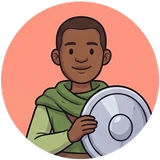
Neutral Good means doing the most good you can, without a strong attachment to rules or to rebellion. A Neutral Good character follows a rule when it helps people and quietly ignores it when it does not. They are kind, practical and humble, and they care more about the result for others than about how it looks or who gets the credit.
On this page
MeaningWhat Does Neutral Good Mean?
In shortNeutral Good means helping people first and following rules only when they help.
Neutral Good sits in the top-centre of the alignment chart: neutral on the rules line, good on the people line. For these characters, rules are tools. They are neither for nor against order; what matters is whether people end up better off.
That makes Neutral Good the most flexible of the good alignments. A Neutral Good character will work with the authorities when that helps and around them when it does not, usually without fuss. Many people describe it as the purest form of good, because it is not mixed with loyalty to a system or a love of breaking one.
- AlignmentNeutral Good
- MottoHelp first, check the rules later.
- NicknameThe Helper
- OppositeNeutral Evil
- Biggest strengthKind and practical
- Biggest flawCan say yes to everyone and burn out
TraitsNeutral Good Traits: Strengths and Flaws
Strengths
- Kind and practical
- Helps without needing credit
- Flexible about how to do the right thing
- Easy to trust and easy to talk to
- Keeps the focus on people, not principles
Flaws
- Can say yes to everyone and burn out
- May avoid conflict even when it is needed
- Inconsistent about rules
- Can be taken advantage of
In peopleWhat Is a Neutral Good Person Like?
In shortA Neutral Good person is warm, practical and quietly generous. They help whoever needs it, follow rules when rules help and skip them when they do not, and rarely make a show of what they do.
ExamplesNeutral Good Examples in Real Life
Everyday situations where someone acts in a Neutral Good way:
- Driving across town at midnight to help a friend and never mentioning it again
- Ignoring a petty office rule to help a customer, then fixing the paperwork
- Giving a stranger the last train ticket
- Volunteering with whichever group helps most this month
- Covering a shift for a colleague with a sick child
Find Your Square on the Chart
12 everyday dilemmas place you on both lines of the alignment chart, with a hint at your personality type. Free, no sign-up.
CharactersNeutral Good Characters in Classic Stories
Characters from well-known public-domain stories that readers and writers often place at Neutral Good:
After his change, he helps people whenever he can, inside the law or outside it.
Kind to everyone she meets, and follows the rules of Oz only while they help her friends.
Quietly gives her time to a poor family, with no interest in praise.
Helps a stranger no rule asked him to help.
ComparisonsNeutral Good vs Other Alignments
| Comparison | The difference |
|---|---|
 Neutral Good vs Lawful Good | Both want to help. Lawful Good insists on doing it properly; Neutral Good just wants it done. |
 Neutral Good vs Chaotic Good | Both put people first. Chaotic Good actively pushes against unfair rules, often in public; Neutral Good skips the rule quietly and moves on. |
 Neutral Good vs True Neutral | True Neutral does not lean toward helping or harming; Neutral Good clearly leans toward helping. |
Dungeons & DragonsNeutral Good in D&D
In Dungeons & Dragons, a Neutral Good character does the best they can to help others according to their needs, without a strong bias toward order or chaos. It suits healers, rangers and helpful wanderers, and it is a flexible choice for players who want a kind character without a strict code.
Tips for playing a Neutral Good character
- Show their kindness through small, practical acts
- Let them work with the law when it helps and around it when it does not
- Give them a limit: something they will refuse to do even to help
Personality typesWhich Personality Types Are Neutral Good?
Alignment and personality type measure different things, and any type can land anywhere on the chart. As a fun link: lawful leans to J, chaotic to P, good to F and evil to T. Neutral Good points to F (people first) only, because it sits in the middle of the rules line. The types with an F:
A fun match, not a test result. The free personality test finds your real four-letter type.
The chartAll 9 Alignments on the Chart
Neutral Good is highlighted. Select any square to read what that alignment means.
Lawful Good Neutral GoodChaotic GoodNeutral
 Lawful NeutralTrue Neutral
 Chaotic NeutralEvil
 Lawful Evil
 Neutral Evil
 Chaotic Evil
Share This Guide
Know someone who would find this useful? Send it to them in one tap.
QuestionsNeutral Good: FAQ
Is Neutral Good good or bad?
Yes. Many people see Neutral Good as the purest good alignment, because the focus stays on helping people rather than on rules or rebellion.
What is the opposite of Neutral Good?
The opposite of Neutral Good is Neutral Evil, in the far corner of the chart: neutral on the rules line and evil on the people line.
What is the difference between Neutral Good and Lawful Good?
Both want to help. Lawful Good insists on doing it properly; Neutral Good just wants it done.
What is the rarest moral alignment?
There is no reliable count. Online polls and quiz results are not representative samples, so any claim about the rarest alignment is a guess. In games and fiction, Lawful Evil and Lawful Neutral are often said to be picked least, because they ask a character to follow strict rules without the reward of being the hero.
What are the 9 alignments?
Lawful Good, Neutral Good, Chaotic Good, Lawful Neutral, True Neutral, Chaotic Neutral, Lawful Evil, Neutral Evil and Chaotic Evil. Each one combines a view on rules (lawful, neutral or chaotic) with a view on other people (good, neutral or evil).
SourcesSources
- Gygax, G. and Arneson, D. (1974). Dungeons & Dragons. Tactical Studies Rules. (The first rules: one line, law against chaos.)
- Gygax, G. (1977). Advanced Dungeons & Dragons Monster Manual. TSR. (Uses the nine alignments.)
- Gygax, G. (1978). Advanced Dungeons & Dragons Players Handbook. TSR. (Describes the full 3 x 3 alignment system.)
- Wizards of the Coast (2016). Dungeons & Dragons System Reference Document 5.1. (Fifth-edition alignment descriptions.)
- The character examples come from the public-domain works named next to each one.