



The short answer
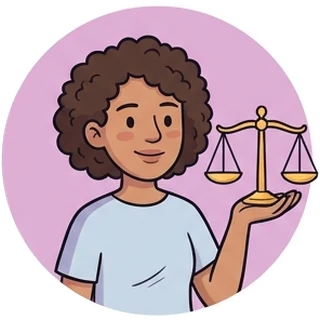
True Neutral means sitting in the exact centre of the alignment chart: no strong pull toward rules or chaos, and no strong pull toward helping or harming others. A True Neutral character does what makes sense in the moment, avoids taking sides and values balance. Some are simply easy-going; others believe the world needs a balance of order and chaos, good and evil.
On this page
MeaningWhat Does True Neutral Mean?
In shortTrue Neutral means staying balanced between rules and freedom, and between self and others.
True Neutral sits in the middle square of the alignment chart, neutral on both lines. It is sometimes called just Neutral. These characters follow rules when they make sense, skip them when they do not, and weigh other people's needs against their own without drama.
There are two kinds of True Neutral. The first is the easy-going person who stays out of fights and lives their own life. The second is the deliberate balancer, like a druid, who believes order and chaos, good and evil, all need each other. Both are calm, flexible and hard to rattle.
- AlignmentNeutral on both lines
- MottoSee every side and pick none.
- NicknameThe Balancer
- OppositeNone: it sits in the centre
- Biggest strengthCalm, flexible and hard to rattle
- Biggest flawCan stay out of fights that need them
TraitsTrue Neutral Traits: Strengths and Flaws
Strengths
- Calm, flexible and hard to rattle
- Sees every side of an argument
- Fair to both sides in a conflict
- Adapts quickly
- Rarely makes enemies
Flaws
- Can stay out of fights that need them
- Can seem indifferent
- Hard to predict or rely on for a cause
- May avoid hard choices
In peopleWhat Is a True Neutral Person Like?
In shortA True Neutral person is calm, open-minded and hard to rattle. They see every side, avoid taking sides, follow rules when they make sense and care about both themselves and others without leaning hard either way.
ExamplesTrue Neutral Examples in Real Life
Everyday situations where someone acts in a True Neutral way:
- Staying friends with both sides after a breakup
- Following the rules at work and ignoring them at home
- Voting on each issue rather than for a side
- Mediating an argument without telling anyone they are wrong
- Keeping a garden that is part tidy beds, part wild corner
Find Your Square on the Chart
12 everyday dilemmas place you on both lines of the alignment chart, with a hint at your personality type. Free, no sign-up.
CharactersTrue Neutral Characters in Classic Stories
Characters from well-known public-domain stories that readers and writers often place at True Neutral:
Helps and teases Alice in equal measure, with no side at all.
Avoids every quarrel and sleeps through a revolution.
Often placed here or at Chaotic Good: he cares most about the puzzle, and lets some culprits go.
ComparisonsTrue Neutral vs Other Alignments
| Comparison | The difference |
|---|---|
 True Neutral vs Lawful Neutral | Lawful Neutral is committed to order; True Neutral is committed to nothing in particular, except perhaps balance. |
 True Neutral vs Chaotic Neutral | Chaotic Neutral actively chooses freedom and change; True Neutral simply goes with what makes sense. |
 True Neutral vs Neutral Good | Neutral Good leans clearly toward helping others; True Neutral weighs others and self evenly. |
Dungeons & DragonsTrue Neutral in D&D
In Dungeons & Dragons, a True Neutral character does what seems like a good idea and does not feel strongly about good and evil or law and chaos. Some, like many druids, see balance as a principle. It suits characters who are more interested in survival, nature or their own path than in big causes.
Tips for playing a True Neutral character
- Decide whether they are easy-going or a deliberate balancer
- Give them a personal goal so they still drive the story
- Let them side with whoever is losing to keep things even
Personality typesWhich Personality Types Are True Neutral?
Alignment and personality type measure different things, and any type can land anywhere on the chart. As a fun link: lawful leans to J, chaotic to P, good to F and evil to T. True Neutral sits in the middle of both lines, so it does not point to any letters: any of the 16 types can be True Neutral.
A fun match, not a test result. The free personality test finds your real four-letter type.
The chartAll 9 Alignments on the Chart
True Neutral is highlighted. Select any square to read what that alignment means.
 Lawful GoodNeutral Good
 Chaotic GoodNeutralLawful Neutral
 True NeutralChaotic NeutralEvil
 Lawful Evil
 Neutral Evil
 Chaotic Evil
Share This Guide
Know someone who would find this useful? Send it to them in one tap.
QuestionsTrue Neutral: FAQ
Is True Neutral good or bad?
It is neither. True Neutral is the most neutral alignment of all. Its strength is balance; its risk is staying out of situations that need someone to act.
What is the opposite of True Neutral?
True Neutral has no opposite: it sits in the exact centre of the chart, neutral on both lines.
What is the difference between True Neutral and Lawful Neutral?
Lawful Neutral is committed to order; True Neutral is committed to nothing in particular, except perhaps balance.
What is the rarest moral alignment?
There is no reliable count. Online polls and quiz results are not representative samples, so any claim about the rarest alignment is a guess. In games and fiction, Lawful Evil and Lawful Neutral are often said to be picked least, because they ask a character to follow strict rules without the reward of being the hero.
What are the 9 alignments?
Lawful Good, Neutral Good, Chaotic Good, Lawful Neutral, True Neutral, Chaotic Neutral, Lawful Evil, Neutral Evil and Chaotic Evil. Each one combines a view on rules (lawful, neutral or chaotic) with a view on other people (good, neutral or evil).
SourcesSources
- Gygax, G. and Arneson, D. (1974). Dungeons & Dragons. Tactical Studies Rules. (The first rules: one line, law against chaos.)
- Gygax, G. (1977). Advanced Dungeons & Dragons Monster Manual. TSR. (Uses the nine alignments.)
- Gygax, G. (1978). Advanced Dungeons & Dragons Players Handbook. TSR. (Describes the full 3 x 3 alignment system.)
- Wizards of the Coast (2016). Dungeons & Dragons System Reference Document 5.1. (Fifth-edition alignment descriptions.)
- The character examples come from the public-domain works named next to each one.