




The short answer
A personality model, or personality theory, is a framework for describing how people differ. The best known are the 16 personality types, the Big Five (OCEAN) traits, the Enneagram's nine types, DISC work styles, attachment styles and Holland's RIASEC career interests. The Big Five has the strongest research support; type models such as the 16 types and the Enneagram are popular for self-reflection. This library explains each model and links a free test for it.
On this page
Library sectionsExplore the Personality Library
Each section explains one personality model or theory, or puts it to work, with a free test to find your own result. New sections are added here as they are published.
Personality models
Full guides to a model and every type in it.
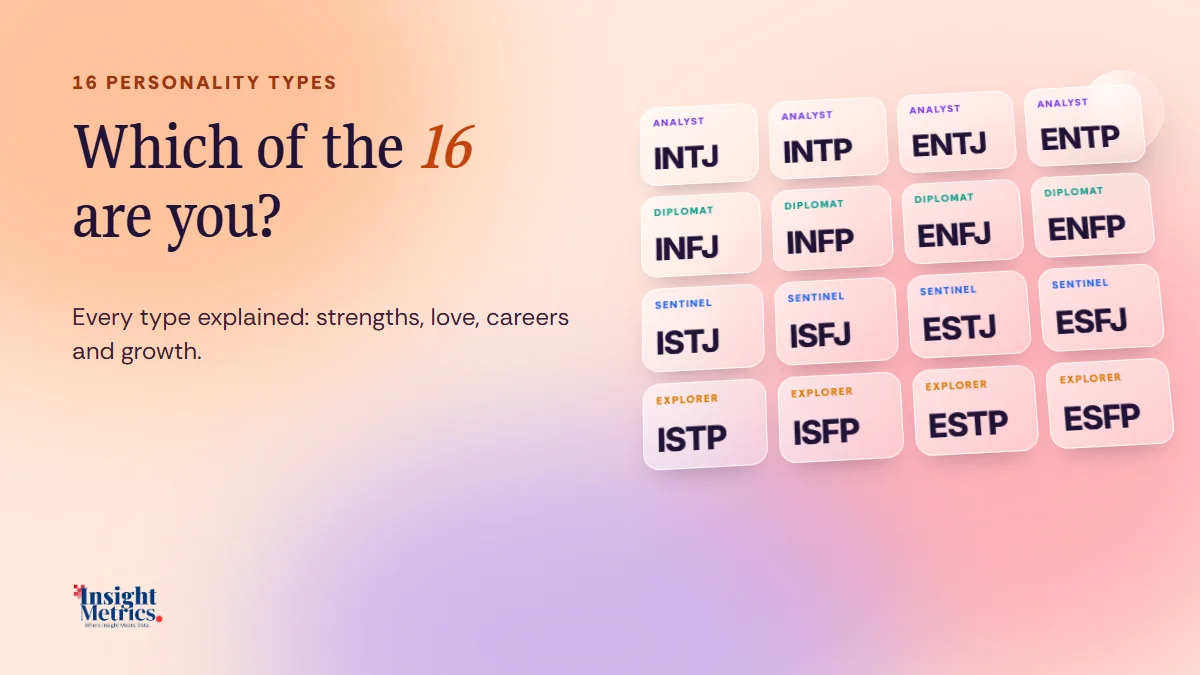
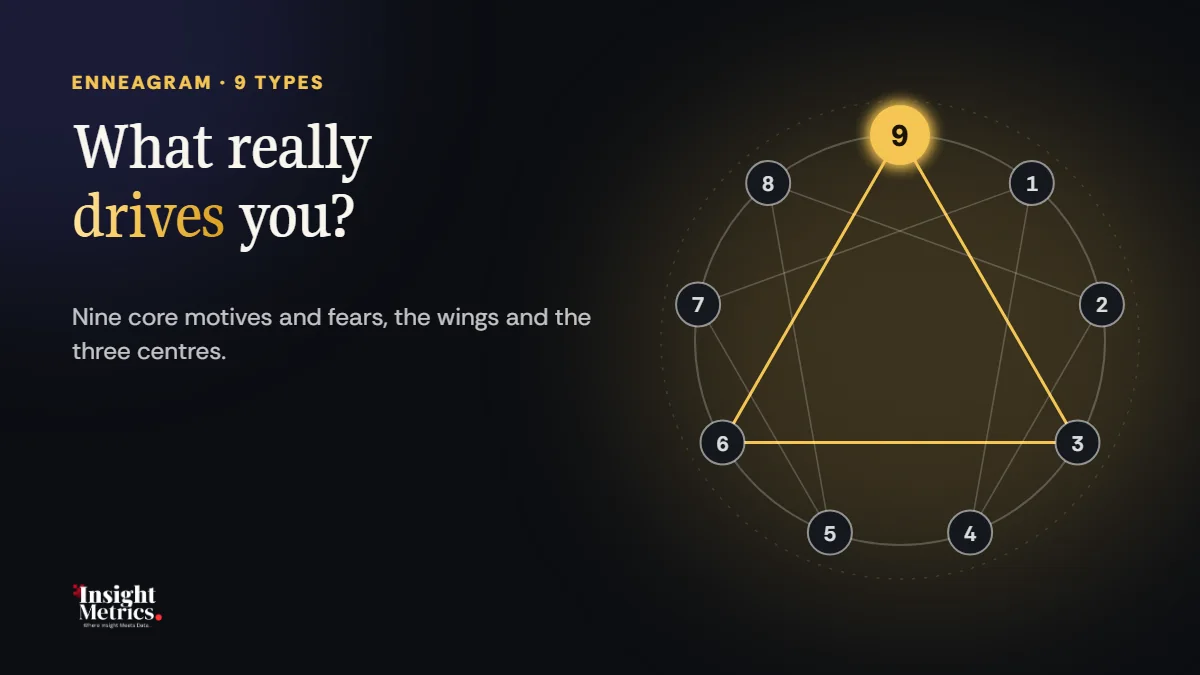
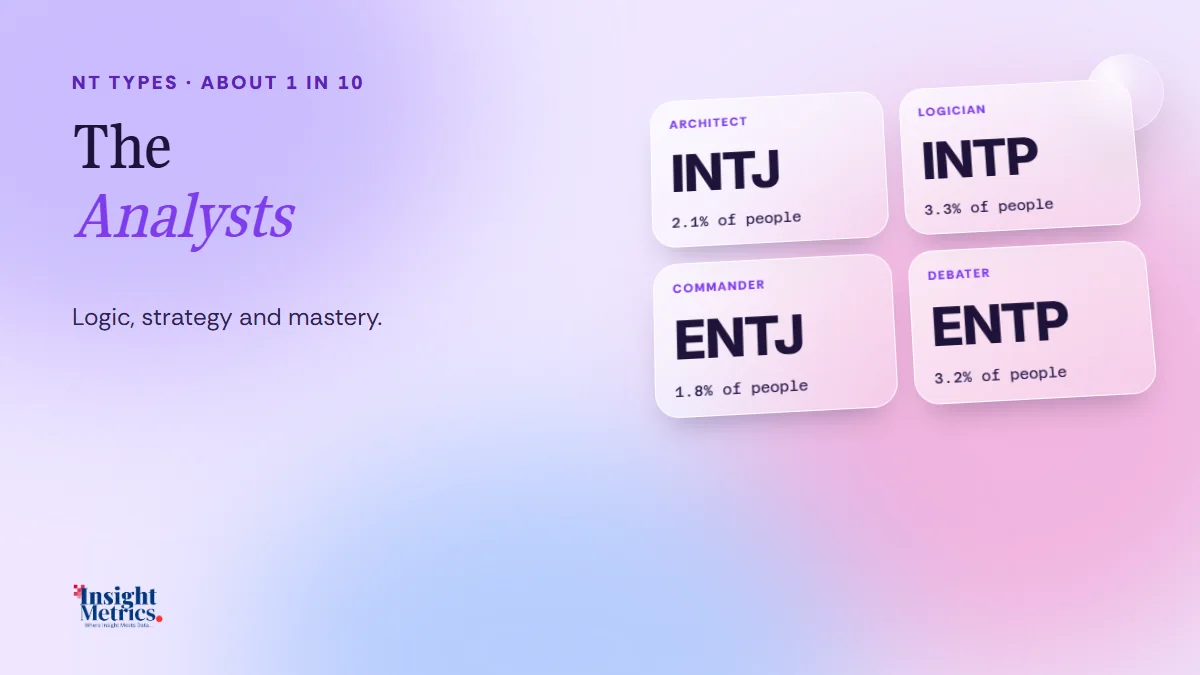
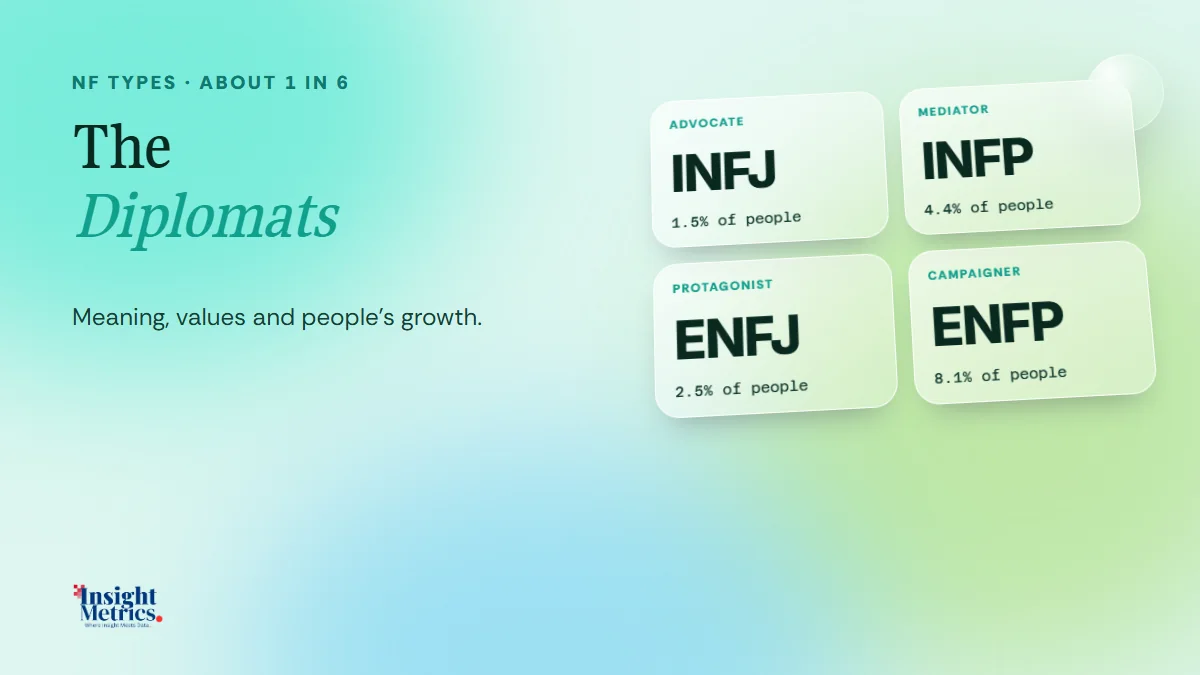
The four type groups
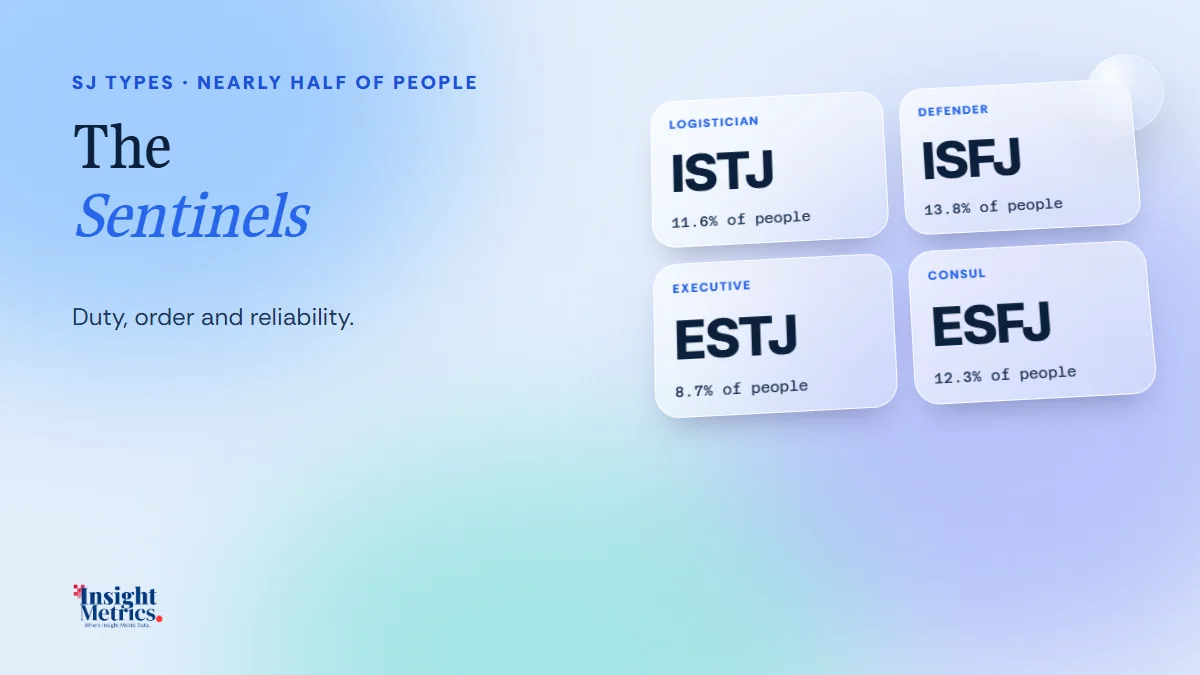
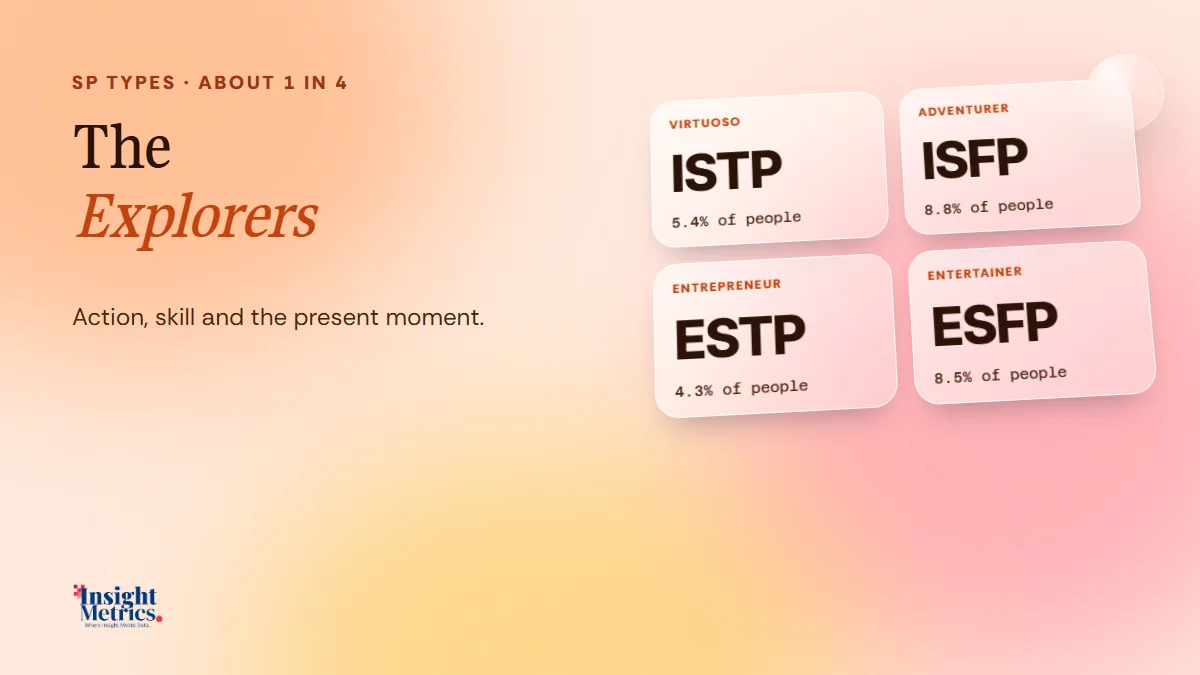
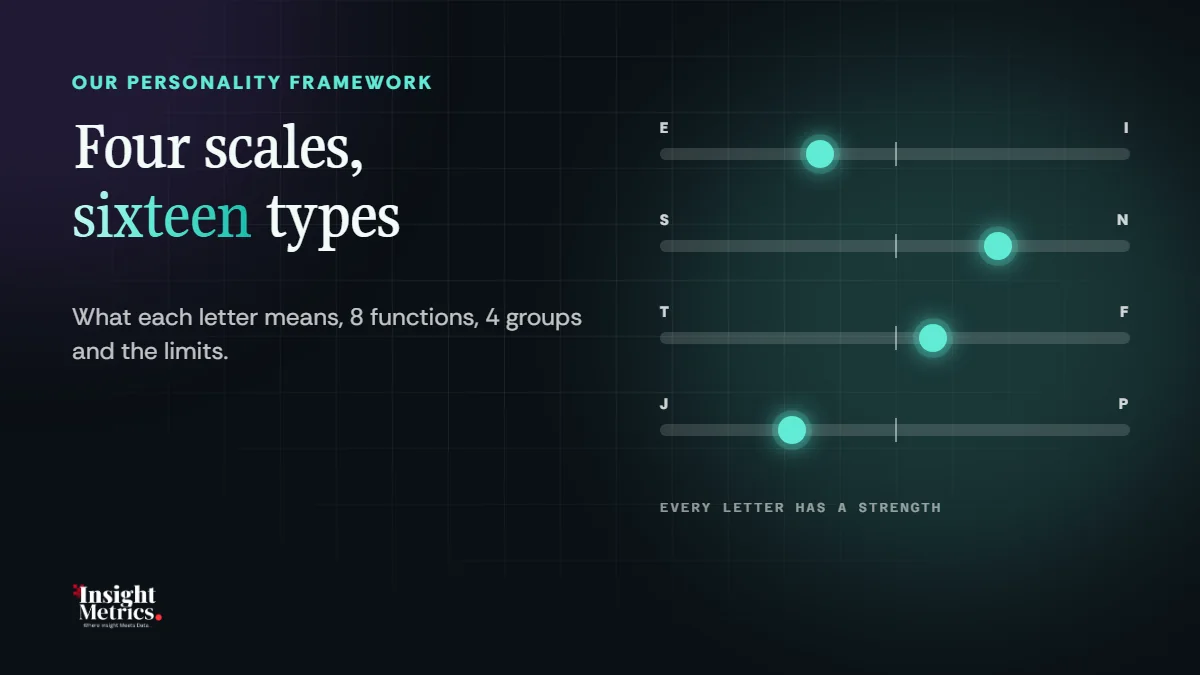
The 16 types fall into four families of four, each sharing two letters and the same core drive.
Guides
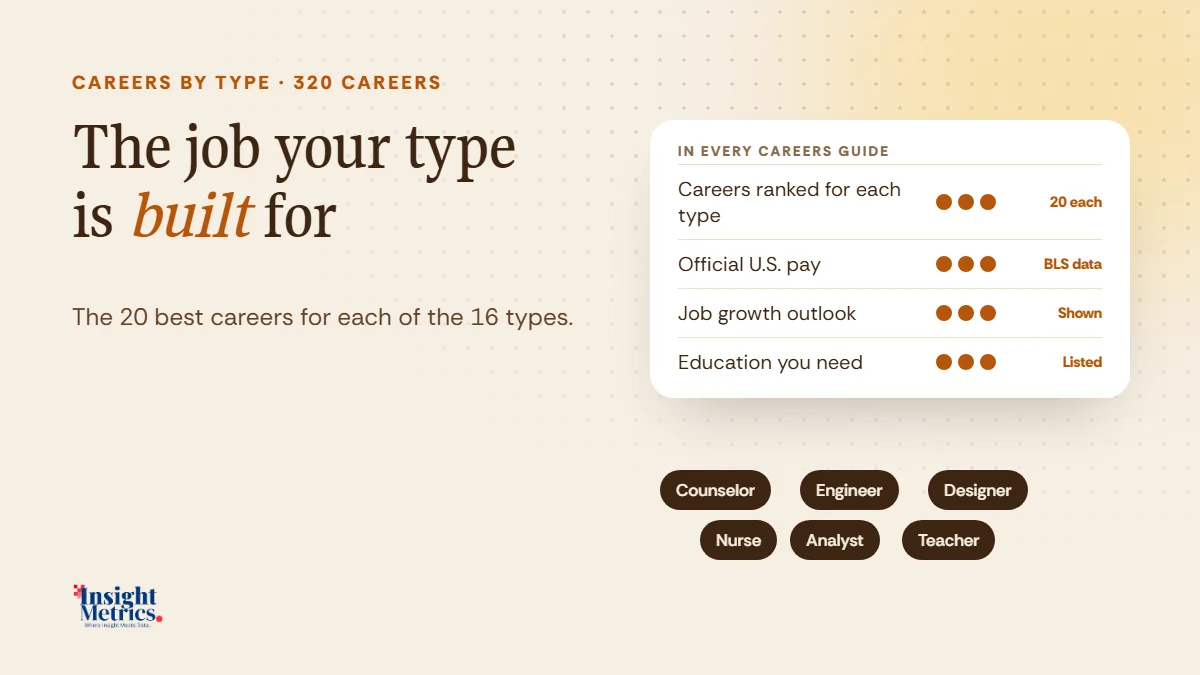
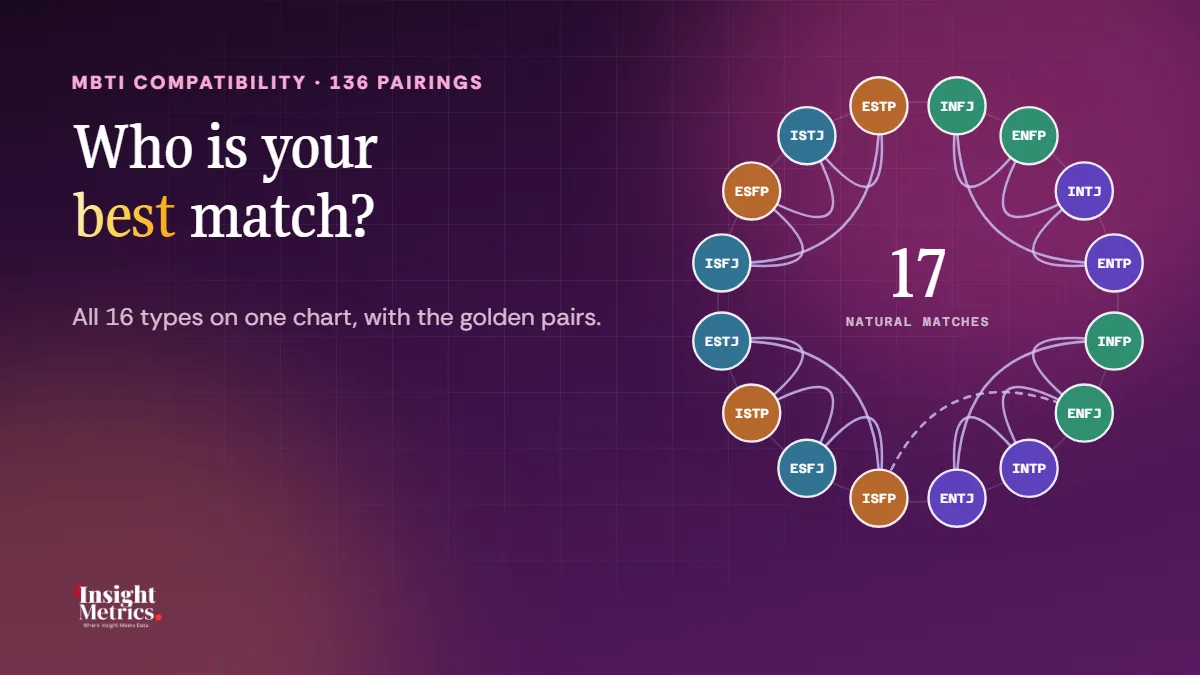
Practical guides that put a model to work.
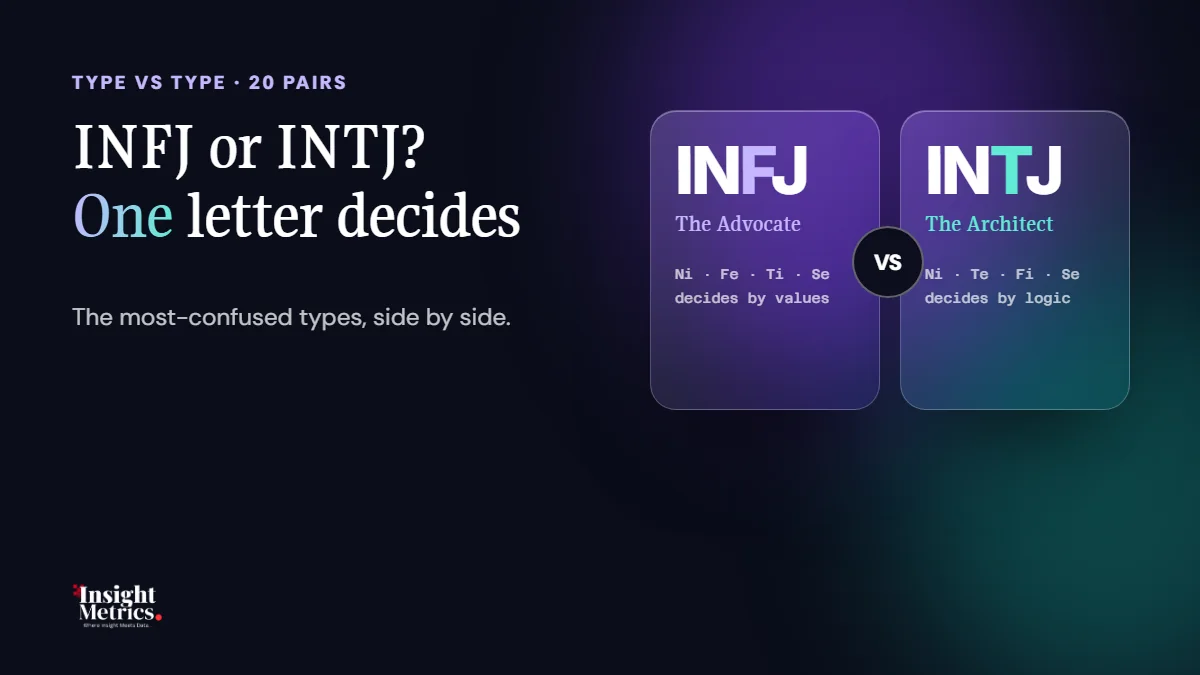
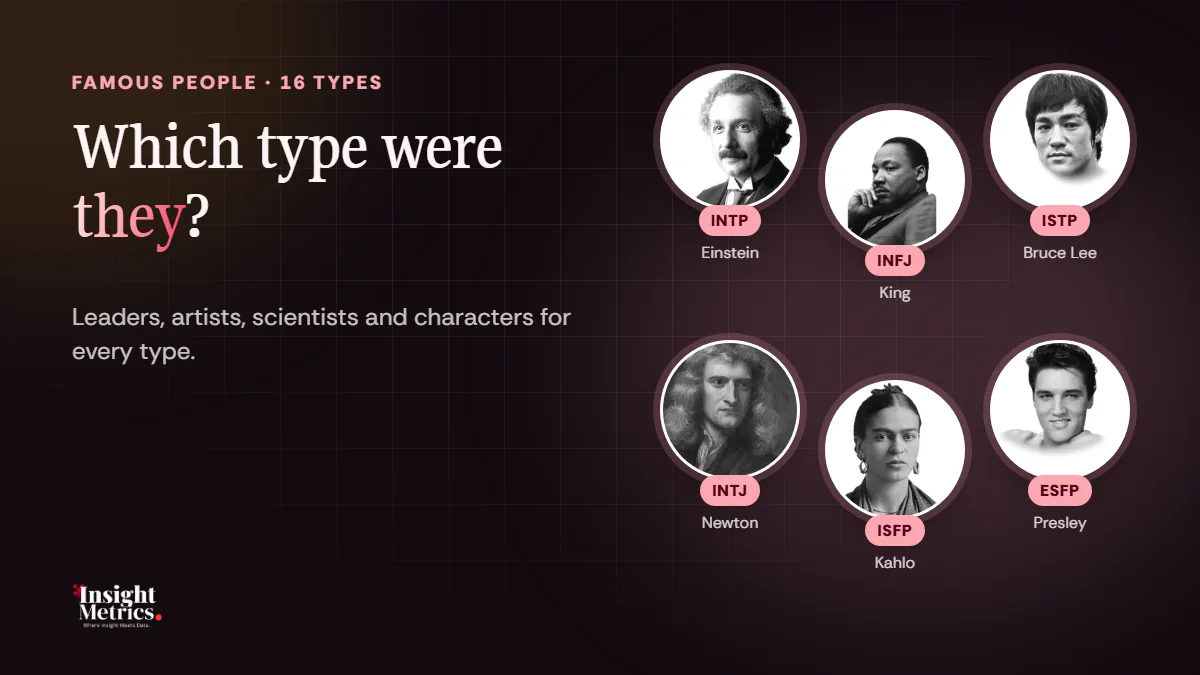
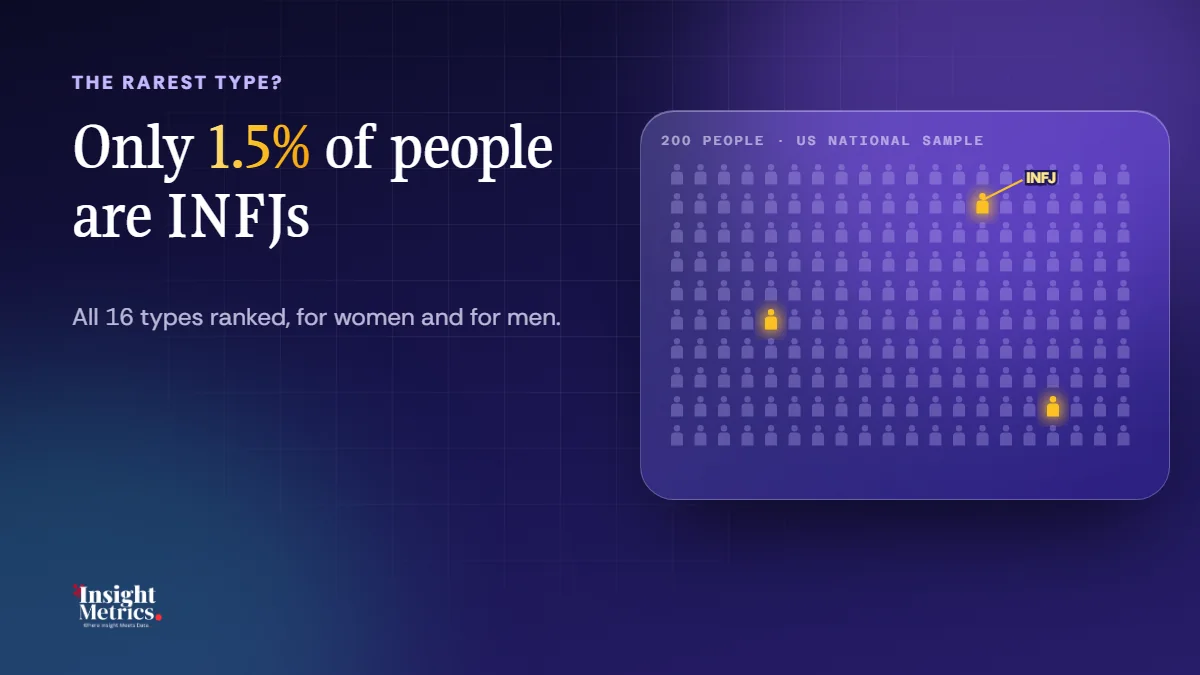
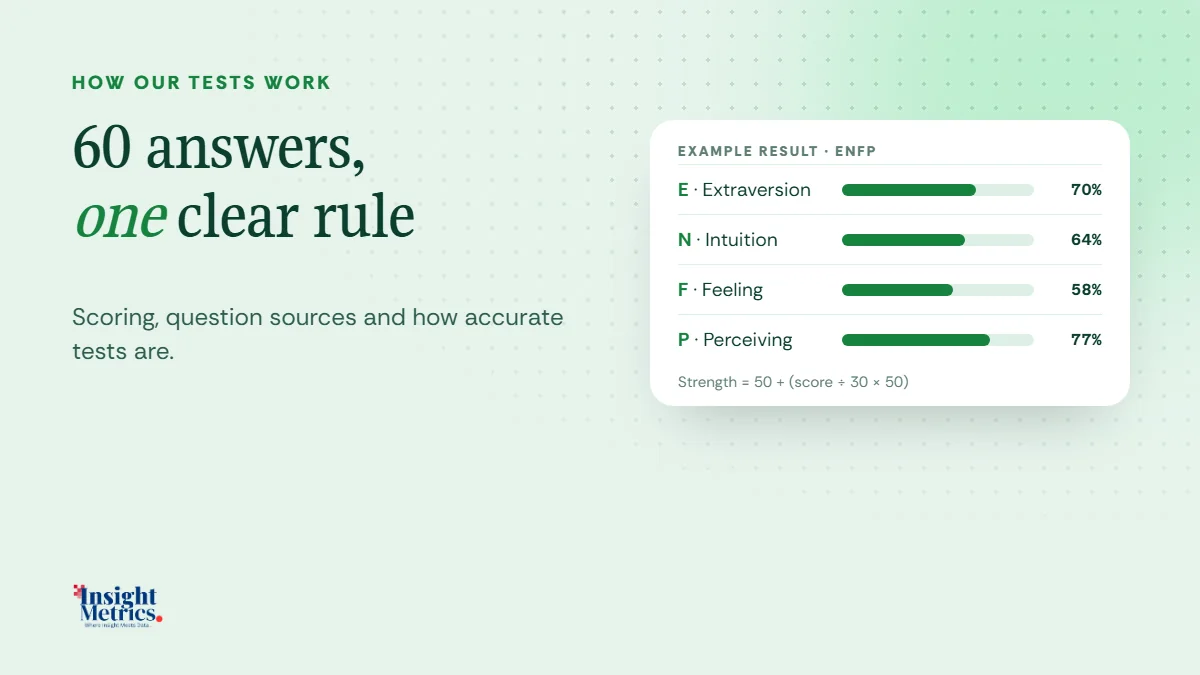
How our tests work
The theory behind our results, and exactly how our tests score your answers.
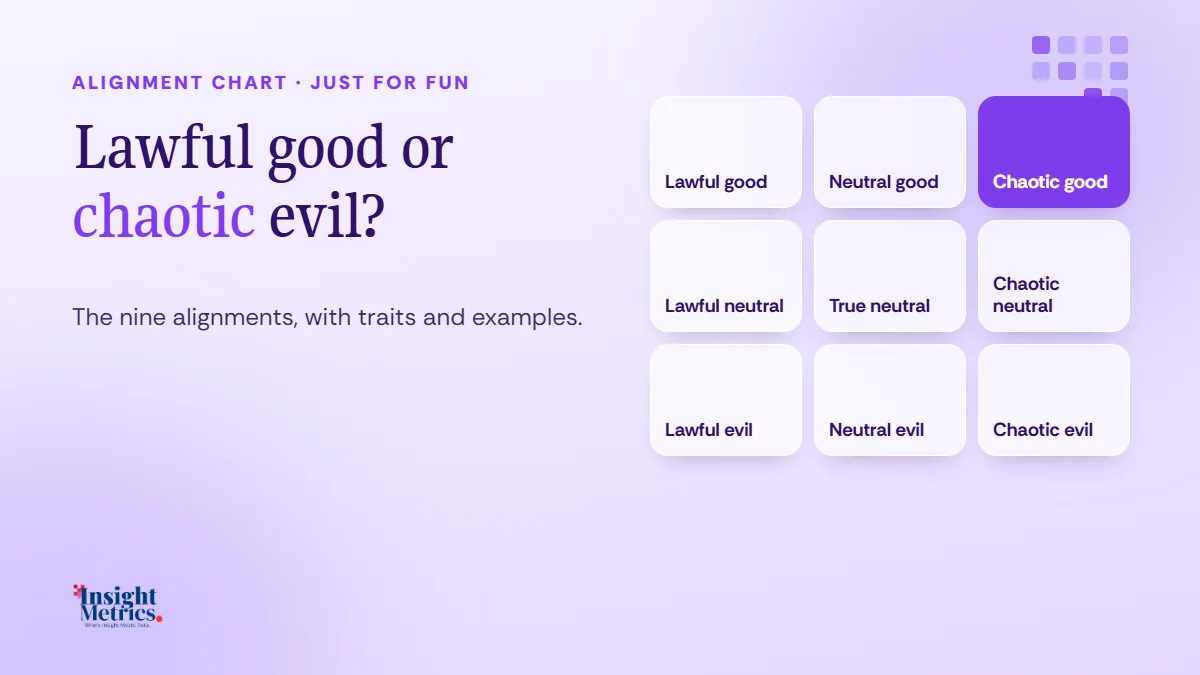
Just for fun
Light frameworks from games and fiction, for fun rather than science.
Side by sidePersonality Models Compared
In shortTwelve personality frameworks side by side, from research-heavy trait scales to models made for fun. Each one comes with a free test.
| Model | What it describes | Your result | Research base | Free test |
|---|---|---|---|---|
| 16 personality types | How you get energy, take in information, make decisions and organise your life | One of 16 four-letter types, such as INFJ | Built on Jung's types and the Myers-Briggs tradition; widely used, though research favours scores over strict type cut-offs | Personality test, 60 statements |
| Big Five (OCEAN) | Openness, conscientiousness, extraversion, agreeableness and neuroticism | Five trait scores | The most widely researched trait model in psychology | Big Five test, 120 questions |
| Enneagram | Your core motivation and core fear | One of 9 types, plus your wing and center | Popular for personal growth; peer-reviewed evidence is still limited | Enneagram test, 84 statements |
| Jung's cognitive functions | The eight mental processes behind the 16 types | Scores for all 8 functions and a best-fit type | Jung's 1921 theory; used for reflection, with little modern research | Cognitive functions test, 64 questions |
| Introversion and extraversion | Where you get and spend your social energy | A 0–100 score: introvert, ambivert or extrovert | Extraversion is a Big Five trait and one of the most studied in psychology | Introvert or extrovert test, 24 questions |
| DISC | How you behave and communicate at work | A DISC style or blend: Dominance, Influence, Steadiness, Conscientiousness | Based on Marston's 1928 model; common at work, with less academic research than the Big Five | DISC test, 44 questions |
| Holland codes (RIASEC) | Your career interests | A Holland code from six interest types | A standard in career counseling, also used by the U.S. O*NET career database | Career test, 60 work activities |
| Attachment styles | How you bond and handle closeness in relationships | Your attachment style, from anxiety and avoidance scores | Grounded in attachment theory; adult attachment is widely studied in relationship research | Attachment style quiz, 30 statements |
| Emotional intelligence (EQ) | How you notice, understand and manage emotions | An EQ score across 5 skill areas | Studied since 1990; researchers still debate how best to measure it | EQ test, 50 questions |
| Love styles | How you give and receive love | Your main love styles out of 8 | A practical framework for reflection, not a clinical measure | Love styles test, 41 questions |
| Color personality | Your style, shown as a color | A color and shade on an 8-color wheel | A simple visual framework for reflection and fun, not a scientific model | Color test, 24 statements |
| Alignment chart | Your moral outlook, borrowed from fantasy games | One of 9 alignments, from lawful good to chaotic evil | From Dungeons & Dragons; for fun, not a psychological model | Moral alignment test |
Question counts are from each test page. Every test is free to take, with a free summary; the full report is optional.
Where to startWhich Personality Model Should You Use?
Start with what you want to know. Each model answers a different question, so the best one depends on your goal.
- The most scientific pictureBig Five (OCEAN)
- Understand yourself in types16 personality types, then cognitive functions
- Motivation and personal growthEnneagram
- Choose a careerHolland codes, then careers by type
- Work well with a teamDISC
- Understand your relationshipsAttachment styles and love styles
- Know your social energyIntroversion and extraversion
- Build people skillsEmotional intelligence
How models differType Models vs Trait Models
Type models sort people into categories. The 16 personality types, the Enneagram and DISC each give you one label. Trait models measure you on a scale instead. The Big Five gives you five scores, and most people land near the middle of each one.
The two approaches overlap more than they seem. A well-known study by McCrae and Costa (1989) found that four of the Myers-Briggs letter pairs line up with four of the Big Five traits. The fifth trait, neuroticism, has no matching letter.
| Type letter pair | Matching Big Five trait |
|---|---|
| Extraversion – Introversion (E/I) | Extraversion |
| Sensing – Intuition (S/N) | Openness |
| Thinking – Feeling (T/F) | Agreeableness |
| Judging – Perceiving (J/P) | Conscientiousness |
| No matching letter | Neuroticism |
That is why a four-letter type is best read as a summary of where you sit on several scales, not a box. If you score near the middle of a scale, the letter on that side of your type is a lighter preference.
Begin With Your Four-Letter Type
The personality test takes 60 statements. Free to take · Free summary · Full report optional.
About this libraryHow We Build the Library
Every guide is written by our editorial team, checked against the research listed under Sources and updated when new studies appear. Where a model has little scientific support, we say so on its page. Fun frameworks like the alignment chart are marked as fun, not science.
Share This Library
Know someone who would find this useful? Send it to them in one tap.
QuestionsPersonality Models: FAQ
What is a personality model?
A personality model is a framework that describes how people differ in the way they think, feel and behave. Some models sort people into types, like the 16 personality types or the nine Enneagram types. Others measure traits on a scale, like the Big Five.
What are the main personality models?
The most widely used are the 16 personality types, the Big Five (OCEAN), the Enneagram, DISC, Holland's RIASEC codes and attachment styles. Emotional intelligence, introversion and extraversion, and Jung's cognitive functions are also common. The comparison table on this page sets all of them side by side.
What are the different types of personality tests?
Personality tests come in two main kinds. Type tests sort you into a category, like the 16 personality types, the Enneagram or DISC. Trait tests score you on scales, like the Big Five, introversion and extraversion, or emotional intelligence. Some tests focus on one area of life, such as Holland's career interests or attachment styles in relationships.
Which personality model is the most scientific?
The Big Five has the strongest research support. Its five traits appear across many languages and cultures and are linked to outcomes such as job performance, health and relationships. Type models such as the 16 types and the Enneagram are best used as tools for reflection and conversation.
How many personality types are there?
It depends on the model: 16 in the four-letter system, 9 in the Enneagram, 4 main styles in DISC, 6 interest types in Holland's RIASEC and 4 attachment styles. The Big Five has no types at all; it gives you five scores instead.
Are the 16 personality types the same as the MBTI?
They come from the same idea. The Myers-Briggs Type Indicator (MBTI) is a trademarked questionnaire built on Jung's types. The 16 personality types on this site use the same four letter pairs, measured by our own test, which is free to take.
Should I take more than one personality test?
Yes. Each model looks at a different side of you, so the results add up rather than compete: the 16 types and the Big Five describe your personality, the Enneagram your motives, Holland codes your interests and attachment styles your relationships. Every test here is free to take, with a free summary.
SourcesSources
- Goldberg, L. R. (1990). An alternative “description of personality”: The Big-Five factor structure. Journal of Personality and Social Psychology, 59(6), 1216–1229.
- McCrae, R. R. and Costa, P. T. (1989). Reinterpreting the Myers-Briggs Type Indicator from the perspective of the five-factor model of personality. Journal of Personality, 57(1), 17–40.
- Jung, C. G. (1921). Psychological Types.
- Hook, J. N., Hall, T. W., Davis, D. E., Van Tongeren, D. R. and Conner, M. (2021). The Enneagram: A systematic review of the literature and directions for future research. Journal of Clinical Psychology, 77(4), 865–883.
- Marston, W. M. (1928). Emotions of Normal People.
- Holland, J. L. (1997). Making Vocational Choices (3rd ed.). Psychological Assessment Resources.
- Hazan, C. and Shaver, P. (1987). Romantic love conceptualized as an attachment process. Journal of Personality and Social Psychology, 52(3), 511–524.
- Salovey, P. and Mayer, J. D. (1990). Emotional intelligence. Imagination, Cognition and Personality, 9(3), 185–211.